Home/Commercial Drone Services/Service areas
Where we fly
Aerial work, borough by borough.
Four services in all five boroughs: roof documentation, construction progress, property inspection imagery and real estate media. What changes from one borough to the next is the building stock, the airspace and how long a site visit realistically takes. Those are the parts worth reading before you book.
Read this first
A borough page is not the same thing as a local crew
Plenty of drone companies publish a page for every town in the tri-state area and have never flown in half of them. We would rather be useful: the pages below say what actually changes when the site is in Greenpoint instead of Riverdale, including the cases where we will tell you the flight is not worth doing.
Booking coverage is the five boroughs plus New Jersey and Connecticut. Manhattan, Brooklyn and Queens make up most of our work simply because that is where the roofing and construction volume is.
The same four services
Roofs, construction progress, property inspection, real estate media. Every borough.
Airspace checked before quoting
New York sits under some of the most restricted airspace in the country. We confirm what a site allows before you commit.
One visit, one dated record
Files named by address and date, sorted, in a format your office can actually use.
Bilingual delivery
Site briefings and crew training available in English and Spanish.
Five boroughs
Pick the one you are working in
Each page covers the roof types and building stock you will actually meet there, how the airspace affects scheduling, and what we deliver. No copied-and-pasted borough names.
Manhattan
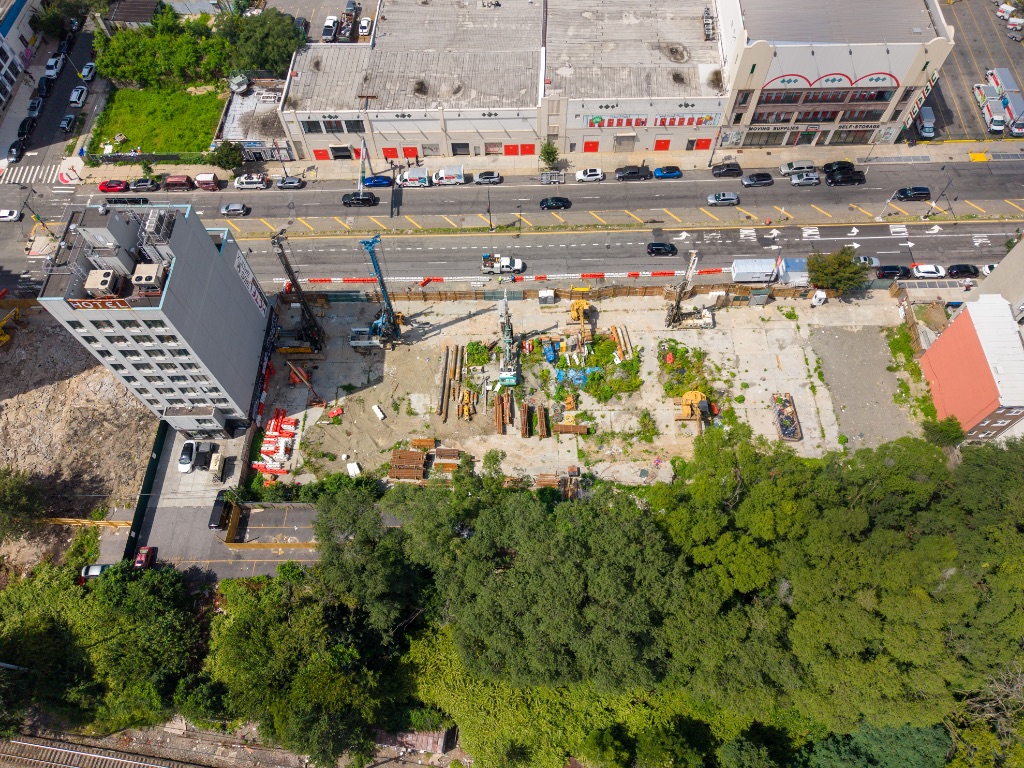
Vertical construction, flat membrane roofs over occupied space, and the strictest airspace of the five. Facade access is expensive; a flight usually is not.
Brooklyn
Brownstone cornices you cannot see behind from the street, attached rowhouses, and waterfront developments going up fast. Our busiest borough for roofing work.
Queens
Low-rise detached and semi-detached housing with big flat roofs, plus conversions and extensions. Two major airports make airspace the deciding factor here.
The Bronx
Five- and six-storey walkups with flat roofs, bulkheads, water tanks and decades of patch history. Riverdale gives you pitched roofs and wooded lots in the same borough.
Staten Island
Detached houses with pitched shingle roofs, larger lots and more wind exposure off the harbour. The most workable airspace of the five.
New Jersey & Connecticut
Same services, different drive. Tell us the town and we will confirm coverage, travel and scheduling before you commit to anything.
What does not change
The part nobody argues about afterwards
Boroughs differ. Deliverables should not. Every flight ends the same way: a dated record, organised, with a short written note of what was captured and what was not.
-
01
Scope, then quote
Address, what you need to see, and what the file is for. We confirm airspace and access before naming a price.
-
02
One site visit
Weather window, site contact, people on the ground, the plan for the day. No crowd, no drama, no hovering over pedestrians.
-
03
Files you can actually open
Named by address and date. Full sets, detail crops and video where the scope includes it.
-
04
A written record
What was captured, from what angles, on what date, and anything that limited the shot. Useful when someone asks later.
On NYC airspace. Most of the city sits inside controlled airspace with additional restrictions around heliports, airports, stadiums and sensitive sites. Some addresses simply cannot be flown by a small drone under current rules. We would rather lose the job at the quoting stage than discover it in your parking lot.
The other division
Flying it yourself is also an option
A lot of roofing and construction companies reach the point where hiring a drone vendor every week stops making sense. At that point the answer is usually to train one or two people on your own crew rather than add another vendor to the list.
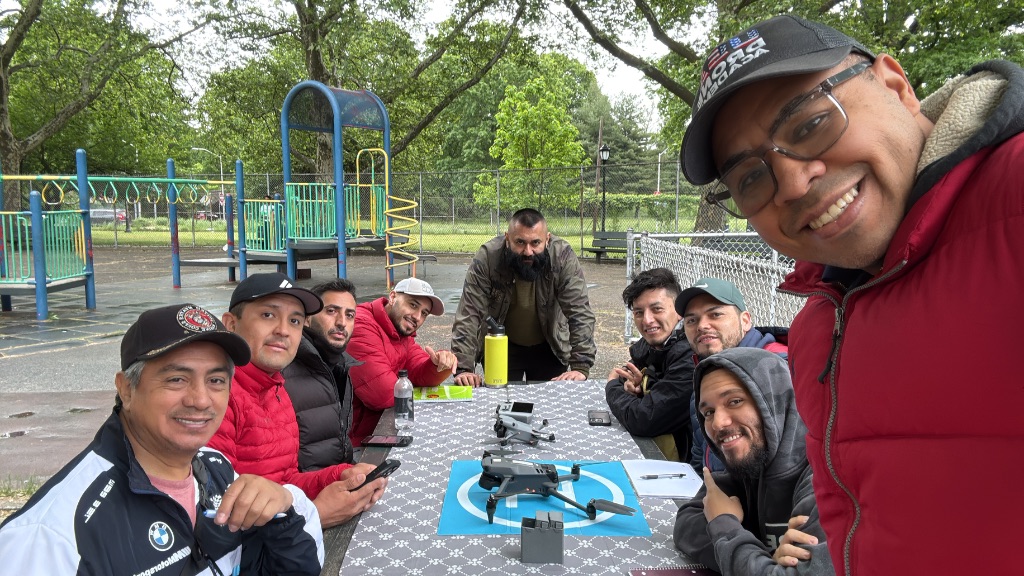
We run that training for roofing and construction teams, in English and in Spanish, on your sites or ours.
Field training
Crews learn on the sites and roof types they actually work with.
Tell us the address
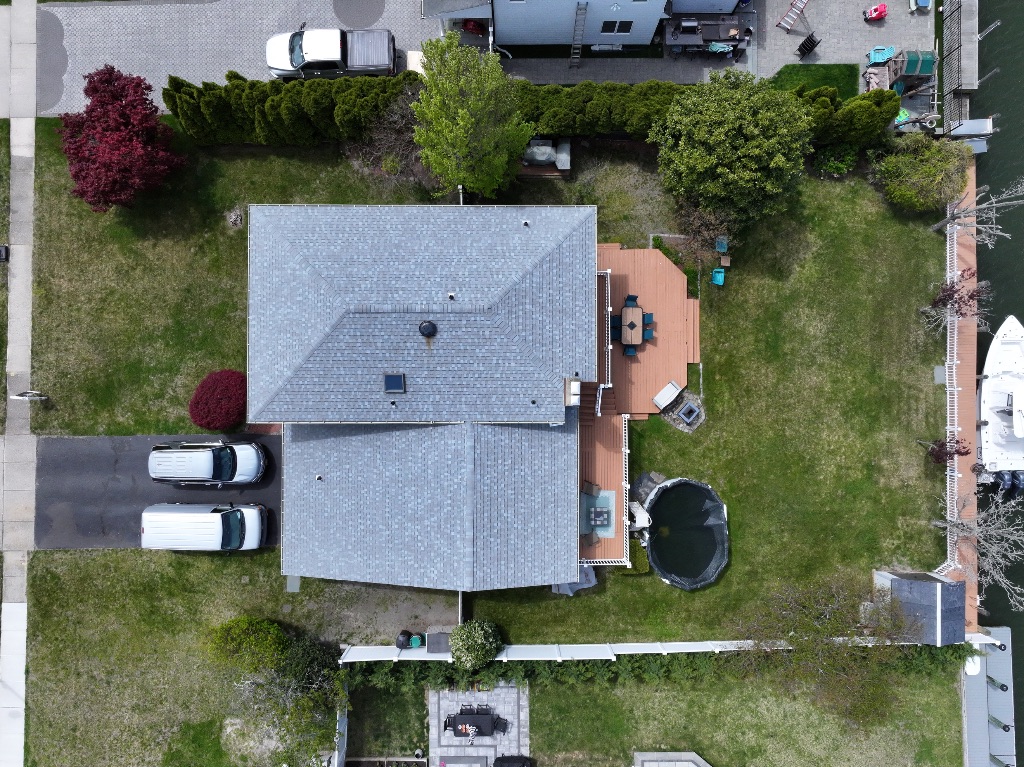
Start with the address and the date
That is enough for us to check airspace, confirm access and come back with a real scope instead of a brochure.